Introduction
Precision, consistency, and reliability are the cornerstones of successful surgical outcomes. Among the many tools that help surgeons achieve excellence, the Hagedorn needles stand out as a staple in suturing and wound closure. Known for its strength and design efficiency, this suture needle has become an essential instrument in surgical settings worldwide.
This article explains why the Hagedorn needle remains a surgical essential, how it compares with other needle types, and why Robbins Instruments is the preferred choice for surgeons seeking consistent, high-quality performance.
Understanding the Hagedorn Needle: What It Is and How It Works
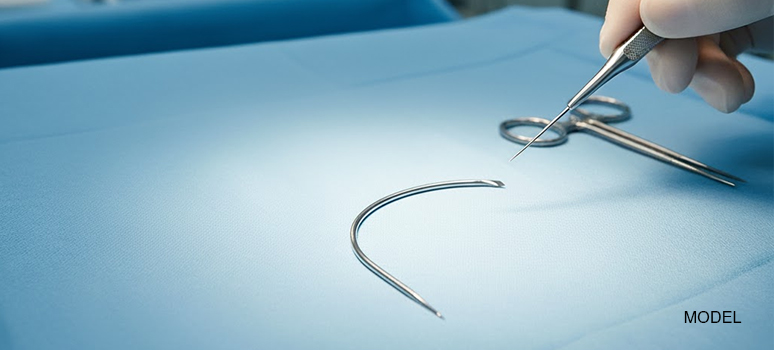
The Hagedorn needle features a curved, flattened body and sharp cutting edge engineered to glide through tissue with control and minimal resistance. Purpose-built for surgery, it offers precision no ordinary sewing needle can match.
Key Features of a Hagedorn Needle
- Triangular Cross-Section:
The Hagedorn needle typically has a three-edged design, offering precision and cutting strength for dense or fibrous tissues. - Curved Shaft:
The curvature allows for easy maneuverability, especially in confined surgical spaces where a straight needle would be difficult to use. - Durable Stainless Steel Construction:
Most high-quality Hagedorn needles, such as those by Robbins Instruments, are made of premium-grade stainless steel for superior corrosion resistance and longevity. - Variety of Sizes:
Available in multiple lengths and diameters, these needles cater to diverse surgical requirements from general surgery to delicate tissue repair.
By design, the Hagedorn needle blends durability and finesse, allowing medical professionals to perform suturing tasks with both precision and ease.
The Role of Hagedorn Needles in Modern Surgery
In every operating room, precise instruments are critical. The Hagedorn needle remains essential for wound closure and tissue repair across diverse fields.
Common Applications
- General Surgery: Used for closing skin, fascia, and muscle layers.
- Plastic and Reconstructive Surgery: Ideal for intricate sutures where cosmetic outcomes matter.
- Veterinary Surgery: Its strength and sharpness make it a top choice for animal tissue repair.
- Emergency Medicine: Reliable for quick wound closure in trauma settings.
Its sharpness and curvature allow surgeons to create secure, low-trauma sutures for faster, cleaner healing.
Why Surgeons Trust Robbins Instruments for Hagedorn Needles
Consistency defines surgical excellence—and Robbins Instruments delivers it. As a trusted manufacturer of precision Hagedorn needles, the company ensures dependable quality and performance.
What Sets Robbins Instruments Apart
- Precision Engineering:
Each needle is crafted with attention to detail, ensuring uniform sharpness and consistency in every unit. - High-Grade Materials:
Robbins Instruments uses surgical-grade stainless steel, providing superior strength, corrosion resistance, and sterility. - Rigorous Quality Control:
Every Hagedorn needle undergoes extensive testing to ensure optimal balance, sharpness, and durability. - Ergonomic Compatibility:
Designed to fit comfortably with various handle needle types, Robbins Instruments ensures a secure grip for precise control.
Surgeons who choose Robbins Instruments benefit from reliable performance that enhances suturing precision and reduces operative fatigue factors that significantly impact overall patient outcomes.
Comparing Hagedorn Needles with Other Surgical Sewing Needles
Each needle type serves a distinct function. The Hagedorn’s curved, flat body and cutting edge set it apart for precision and control in tougher tissues.
| Needle Type | Shape | Primary Use | Tissue Type |
| Hagedorn Needle | Curved with flat body and cutting edge | General and specialty surgeries | Dense and fibrous tissue |
| Round Body Needle | Circular cross-section | Internal soft tissues (e.g., organs) | Delicate tissue |
| Cutting Needle | Triangular cross-section | Skin closure | Tough tissue |
| Taper Point Needle | Smooth body | Vascular and intestinal surgeries | Soft tissue |
The Hagedorn needle’s combination of a curved, flattened body and cutting edge provides an advantage in precision cutting and easy tissue passage, reducing trauma during suturing.
The Importance of Precision in Suturing
Every suture is a promise, a commitment to healing and restoration. The right tools determine the success of that promise.
Precision Means Fewer Complications
A precisely designed Hagedorn needle ensures that sutures are uniform and properly tensioned, which helps prevent complications like infection or wound dehiscence (wound reopening).
Durability Reduces Breakage
High-quality stainless steel construction ensures that the needle remains sharp and resistant to bending or breaking during procedures, improving reliability in high-stakes surgical settings.
Compatibility Enhances Control
When paired with the right-hand needle, such as those designed by Robbins Instruments, surgeons gain improved dexterity, ensuring smooth, accurate movement even in restricted spaces.
How to Choose the Right Hagedorn Needle for Your Practice
Selecting the appropriate Hagedorn needle involves considering several factors based on surgical needs and tissue types.
1. Needle Size and Gauge
Choose the appropriate size depending on the type of tissue and depth of suturing. Smaller gauges are ideal for fine tissue, while larger sizes work best for tougher areas.
2. Curvature and Length
Different curvatures (e.g., 3/8 circle or 1/2 circle) offer various levels of access and control. Shorter needles provide better precision for small incisions, whereas longer needles are suited for deeper tissue.
3. Material and Coating
Look for needles made of corrosion-resistant stainless steel or titanium. Some are coated for smoother penetration, minimizing tissue drag.
4. Handle Compatibility
Ensure the needle fits securely into your preferred handle needle. Robbins Instruments offers a range of compatible handles that provide stability and ergonomic comfort.
Why Every Surgeon Should Have Hagedorn Needles in Their Kit
No matter the surgical specialty, having reliable Hagedorn needles on hand is crucial. Their design promotes:
- Consistency in suturing results
- Reduced tissue trauma
- Enhanced control in confined spaces
- Durability under demanding conditions
In surgical environments where precision is non-negotiable, Robbins Instruments provides the confidence surgeons need ensuring that every suture, every closure, and every patient outcome is supported by the highest-quality instruments available.
Conclusion: Dependability You Can Feel in Every Stitch
From its ergonomic curvature to its durable construction, the Hagedorn needle is more than just a tool; it’s a symbol of surgical precision and trust. When sourced from Robbins Instruments, surgeons know they’re investing in craftsmanship that upholds the highest medical standards.
Reliable suturing ensures optimal healing and patient safety. Each Robbins Instruments Hagedorn needle reflects the harmony of engineering excellence and surgical mastery—dependability you can feel in every stitch.
FAQS
1. What is a Hagedorn needle used for?
A Hagedorn needle is used for suturing in general, plastic, and veterinary surgeries. Its curved, flattened design allows easy penetration of dense or fibrous tissue with minimal trauma.
2. How is a Hagedorn needle different from other surgical sewing needles?
Unlike round-bodied or taper-point needles, the Hagedorn needle has a cutting edge and a curved shaft, making it ideal for tough tissues and confined surgical spaces.
3. What materials are Robbins Instruments’ Hagedorn needles made from?
Robbins Instruments manufactures Hagedorn needles from high-grade stainless steel, ensuring strength, corrosion resistance, and long-lasting sharpness.
4. How should I sterilize Hagedorn needles?
After rinsing and cleaning, sterilize Hagedorn needles using an autoclave following standard surgical protocols to maintain their quality and integrity.
5. Why should I choose Robbins Instruments for Hagedorn needles?
Robbins Instruments provides precision-engineered, durable, and ergonomically designed Hagedorn needles trusted by surgeons for consistent, high-quality suturing results.