Precision in Every Harvest: The Power of Multi-Hole Fat Harvesting Cannulas
Introduction: The Evolution of Fat Harvesting Technology
Fat grafting has emerged as one of the most versatile and transformative techniques in aesthetic and reconstructive surgery. From facial rejuvenation to breast reconstruction, the ability to harvest, process, and transfer a patient’s own adipose tissue offers natural-looking results with minimal risk of rejection or allergic reaction. However, the success of any fat grafting procedure depends heavily on the quality of the harvested tissue and the efficiency of the harvesting process itself.
This is where multi-hole fat harvesting cannulas came in and changed the field completely. These specialized instruments are designed not just to remove fat, but to do so in a way that preserves the viability of adipose-derived stem cells and stromal vascular fraction cells, which are the key components that determine graft survival and long-term outcomes.
At Robbins Instruments, we understand that precision instrumentation is the foundation of successful fat grafting. This comprehensive guide explores the science, applications, and best practices for multi-hole fat harvesting cannulas, helping surgeons and medical professionals make informed decisions for their practice.
What Are Multi-Hole Fat Harvesting Cannulas? A Complete Overview
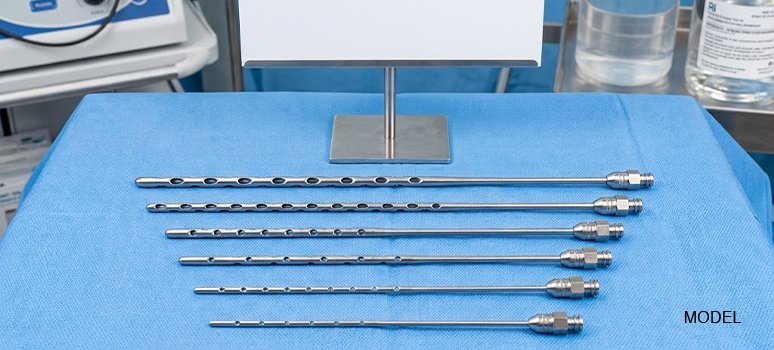
A multi-hole fat harvesting cannula is a specialized surgical instrument featuring a hollow tube with multiple apertures (holes) along its distal end. Unlike traditional single-hole cannulas, these instruments allow for more efficient fat aspiration by distributing suction across several points simultaneously.
Key Design Features
Multi-hole fat harvesting cannulas are precision-engineered instruments with several distinguishing design features. They typically feature multiple openings ranging from 3 to 12 holes arranged in various configurations along the cannula shaft. The tips may be blunt or sharp, depending on the tissue type and harvesting strategy. These instruments are constructed from durable stainless steel, ensuring sterility, reusability, and resistance to the significant pressure generated by suction systems. Many also feature ergonomic handles for comfortable, precise manipulation during prolonged procedures.
How They Work
The cannula is inserted through a small incision and passed through the subcutaneous fat layer. As the surgeon moves the cannula back and forth, the multiple holes aspirate fat tissue into the hollow lumen, which is connected to a suction device or syringe for collection. This design allows for more efficient harvesting with fewer passes, reducing procedure time and tissue trauma.
The Science Behind Multi-Hole Design: Why More Holes Mean Better Results
Research has demonstrated significant advantages to multi-hole cannula design, particularly regarding harvesting efficiency and fat viability.
Enhanced Harvesting Efficiency
A patent study investigating cannulas with increasing numbers of side holes found that yield of fat per stroke increased linearly with the number of side holes. Cannulas with 9 holes proved most efficient, allowing effective harvesting at pressures as low as 240 mmHg, which is significantly lower than conventional pressures.
This is crucial because lower vacuum pressures cause less damage to adipose tissue, preserving the viability of fat cells and the stromal vascular fraction (SVF) that contains regenerative stem cells.
Optimized Cell Viability
A 2025 study published in Plastic and Reconstructive Surgery – Global Open examined the impact of different cannula designs on cell viability. The researchers found that handheld syringe liposuction preserves stromal cell viability with rates around 98%, regardless of cannula type. Additionally, multi-hole cannulas with sharp point ports enable more rapid aspiration, especially in dense fibrous tissue. The study also noted that larger cannula diameters yield more SVF cells, though differences between designs were not statistically significant.
The Barbed vs. Smooth Debate
Another study comparing barbed versus smooth multi-hole cannulas found that barbed cannulas harvested more living cells and more adipose-derived stem cells (ASCs) in the high-density fraction of centrifuged adipose tissue. This suggests that the mechanical disruption caused by barbed tips may actually enhance cell yield in certain contexts, making them a valuable option for specific clinical scenarios.
Choosing the Right Cannula: A Guide to Types and Configurations
Different procedures require different cannula configurations. Understanding the available options helps surgeons select the most appropriate instrument for each clinical scenario.
By Hole Count and Arrangement
The number and arrangement of holes significantly impact harvesting efficiency and tissue preservation. 3-hole (Mercedes) cannulas feature three openings around the tip and are ideal for fibrous tissue and larger volume harvesting. 4-hole cannulas offer versatile general use with various hole arrangements. 9-hole cannulas, featuring three series of three holes, provide high-efficiency harvesting at low pressure. 12-hole cannulas deliver maximum efficiency for large-volume harvesting. For specialized applications, 24-hole cannulas are available for advanced aquavage fat harvesting systems.
By Diameter
The ideal cannula diameter depends on patient anatomy and the specific harvesting site. 2.4 mm cannulas are optimal for slender patients with delicate tissue. 2.7 mm cannulas work better for fibrous tissue in obese patients. For general harvesting purposes, 3 to 5 mm cannulas are commonly used and provide a good balance between efficiency and tissue preservation.
By Tip Style
Tip design significantly influences tissue trauma and harvesting efficiency. Blunt tip cannulas provide reduced tissue trauma and are preferred for fat grafting scenarios where cell viability is paramount. Sharp point port cannulas are more efficient in dense fibrous tissue, allowing for easier penetration. Spatula tip cannulas are designed for delicate areas like the face, chin, and knees, where precision is essential.
Where Precision Matters: Clinical Applications of Multi-Hole Cannulas
Facial Fat Grafting
Precision is paramount in facial rejuvenation. Smaller gauge microcannulas, such as the Robbins Microcannulas 25G x 50mm, allow for meticulous contouring with minimal trauma. These fine instruments enable surgeons to address delicate areas like the nasolabial folds, tear troughs, and lips with exceptional accuracy.
Breast Reconstruction and Augmentation
Larger cannulas are typically used for high-volume fat transfer to the breasts. The ability to harvest large volumes while preserving cell viability is essential for long-term graft retention. Multi-hole cannulas enable efficient harvesting from donor sites while maintaining the quality of adipose tissue required for successful breast augmentation or reconstruction outcomes.
Body Contouring
Multi-hole cannulas enable efficient fat removal from donor sites like the abdomen, flanks, and thighs. The linear relationship between hole count and harvesting efficiency means shorter procedure times and less surgeon fatigue. This efficiency translates to better patient experiences and more predictable surgical outcomes.
Mastering the Technique: Best Practices for Optimal Fat Harvesting
Selecting the Right Cannula
Proper cannula selection is the foundation of successful fat harvesting. Surgeons should carefully consider the amount of fat to be harvested, assess the fibrousness of the donor site, and match the cannula diameter to patient anatomy. For fat grafting applications, prioritize cannulas that minimize tissue trauma to preserve graft viability.
Proper Technique
Mastering the technique is essential for optimal outcomes. Insert the cannula slowly and gently through the incision to minimize tissue trauma. Use a to-and-fro motion to maximize harvesting efficiency while maintaining consistent suction. Maintain low vacuum pressure between 250-350 mmHg to preserve fat viability. Avoid forcing the cannula through resistant tissue, as this can damage both the instrument and the harvested cells.
Safety Considerations
Patient and instrument safety should always be prioritized. Sterilize thoroughly before each use to prevent infection. Inspect for structural integrity before procedures to identify any damage that could compromise performance or safety. Limit hole placement to half the cannula circumference to prevent breakage—a serious complication that could require surgical removal. Dispose of single-use cannulas properly in sharps containers to maintain a safe surgical environment.
Built to Last: Structural Design and Safety Considerations
The arrangement of holes is critical for safety and performance. Research indicates that holes should ideally be aligned along half the cannula circumference, leaving the other half intact to maintain structural integrity. This design principle prevents the risk of cannula breakage—a serious complication that could require surgical removal if fragments become lodged in tissue.
Moreover, having too many holes along the shaft restricts the excursion range during liposuction, as proximal holes cause loss of vacuum when the cannula is retracted near the skin insertion site. This design consideration ensures that surgeons can achieve the full range of motion needed for effective harvesting.
What’s Next? The Future of Fat Harvesting Technology
Power-Assisted Systems
Power-assisted liposuction (PAL) machines use vibrating or oscillating cannulas to gently emulsify fat deposits. This mechanized process significantly reduces procedure times and enhances precision while minimizing patient discomfort. These systems represent a significant advancement in fat harvesting technology, offering greater control and consistency.
Closed-Loop Systems
Innovative closed-loop harvesting systems allow for continuous flow harvesting, collection, and grafting within a sterile environment, reducing air exposure and fat waste. These systems minimize handling of harvested tissue, preserving cell viability and improving overall graft quality.
Customization
Leading manufacturers now offer fully customizable cannulas, allowing surgeons to specify exact dimensions, hole configurations, and tip styles to match their technique and patient anatomy. This level of customization ensures that surgeons have access to instruments perfectly suited to their unique clinical needs.
The Robbins Advantage: Precision Instruments for Superior Outcomes
Multi-hole fat harvesting cannulas represent a significant advancement in aesthetic and reconstructive surgery. Their ability to efficiently harvest viable fat tissue while minimizing trauma has made them indispensable tools for fat grafting procedures.
When selecting a cannula, consider patient anatomy and donor site characteristics, procedure requirements including volume, precision, and tissue type, evidence-based design supporting cell viability and efficiency, and safety features such as structural integrity and proper hole placement.
Robbins Instruments offers a comprehensive range of high-quality fat harvesting cannulas designed to meet the diverse needs of modern surgical practices. With a commitment to precision engineering and patient safety, Robbins Instruments provides the instrumentation surgeons trust for optimal outcomes.
FAQs
1. What is the optimal number of holes for a fat harvesting cannula?
Research shows harvesting efficiency increases linearly with the number of side holes. Cannulas with 9 to 12 holes have demonstrated excellent efficiency at low vacuum pressures (240-350 mmHg), which helps preserve fat viability. However, structural integrity must be maintained by limiting holes to half the cannula circumference.
2. Does the type of cannula affect fat graft survival?
Studies have found no significant difference in stromal cell viability between different cannula designs, with viability rates around 98% for both. However, cannula choice can affect harvesting efficiency and the yield of stromal vascular fraction cells, which may impact long-term graft survival.
3. What size cannula should I use for fat harvesting?
The ideal diameter depends on patient anatomy and the harvest site. 2.4 mm is recommended for slender patients, while 2.7 mm works better for fibrous tissue in obese patients. For general purposes, 3-5 mm cannulas are commonly used.
4. Why is low-pressure harvesting important for fat grafting?
Lower vacuum pressures (250-350 mmHg) cause less mechanical damage to adipose tissue, preserving the viability of fat cells, stromal vascular fraction, and adipose-derived stem cells that are essential for successful graft integration and long-term retention.
5. What safety considerations apply to multi-hole cannulas?
Key safety considerations include: ensuring holes are aligned along half the cannula circumference to prevent breakage, avoiding the use of cannulas with structural damage, and proper sterilization before each use. Single-use cannulas should be disposed of in appropriate sharps containers.