
Secure Your Closure: Trustworthy Surgical Needle Holders for Confident Wound Management
Introduction
Effective wound closure is essential to successful surgical outcomes. Whether performing reconstructive surgery, dermatologic procedures, or plastic surgery, surgeons depend on reliable instruments to achieve precise and consistent results.
Among these essential tools, surgical needle holders play a vital role in ensuring secure suturing, minimizing tissue trauma, and promoting efficient healing.
Poorly designed instruments can reduce accuracy, increase hand fatigue, and affect patient outcomes. This is why selecting high-quality needle holders is not merely a matter of preference—it is a necessity for confident wound management.
Understanding Surgical Needle Holders
Surgical needle holders are specialized instruments designed to grasp and guide surgical needles during suturing procedures. Their primary purpose is to provide surgeons with maximum control when passing a surgical needle through tissue.
Unlike standard forceps, needle holders feature locking mechanisms and textured jaws that help prevent needle slippage during suturing. This enables accurate suture placement, consistent tension, and efficient wound closure.
In virtually every surgical specialty, needle holders are indispensable tools used for:
- General surgery
- Plastic surgery
- Dermatology
- Cardiovascular surgery
- Orthopedic surgery
- Neurosurgery
- Gynecological procedures
- Veterinary surgery
The ability to control needle placement directly influences wound approximation, scar appearance, and overall healing outcomes.
Why Precision Matters During Wound Closure
Wound closure is more than simply bringing tissue edges together. Proper closure helps:
- Reduce infection risk
- Minimize bleeding
- Promote faster healing
- Improve cosmetic outcomes
- Maintain tissue integrity
- Prevent wound dehiscence
Even the most skilled surgeon depends on reliable instruments to achieve these goals.
When a surgical needle slips during suturing, it can lead to:
- Tissue trauma
- Needle damage
- Increased procedure time
- Surgeon frustration
- Reduced precision
High-quality needle driver forceps eliminate these issues by providing secure needle engagement and superior maneuverability.
Key Components of Surgical Needle Holders
Understanding the anatomy of a needle holder helps surgeons select the appropriate instrument for specific procedures.
Jaws
The jaws are designed to grip the needle securely.
Features often include:
- Cross-serrated surfaces
- Tungsten carbide inserts
- Fine-textured gripping patterns
These features improve grip while reducing needle damage.
Ratchet Lock Mechanism
The ratchet lock allows the surgeon to maintain consistent grip pressure without continuously squeezing the handles.
Benefits include:
- Reduced hand fatigue
- Enhanced control
- Improved procedural efficiency
Handles
Handles vary depending on the design and intended application.
Ergonomic handles contribute to:
- Better comfort
- Improved dexterity
- Reduced strain during lengthy procedures
Shank
The shank connects the jaws to the handles and provides leverage for precise movement.
Common Types of Surgical Needle Holders
Different surgical procedures require different instrument designs. Understanding the available options helps surgeons make informed choices.
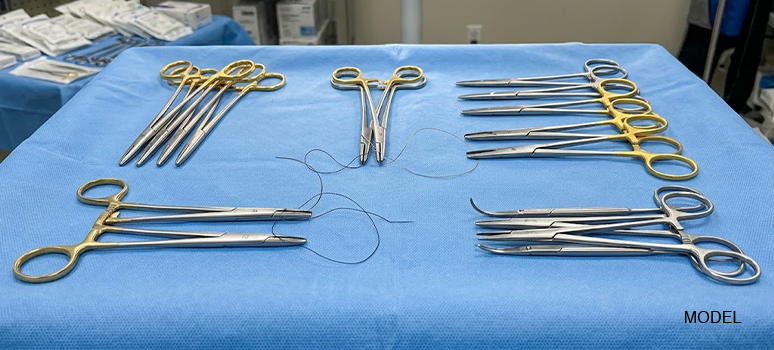
Mayo-Hegar Needle Holders
Mayo-Hegar needle holders are among the most versatile and widely used surgical needle holders.
Ideal for:
- General surgery
- Soft tissue procedures
- Large and medium-sized sutures
Advantages include:
- Strong grip
- Durable construction
- Reliable performance
Olsen-Hegar Needle Holders
These combine needle-holding functionality with integrated scissors.
Benefits include:
- Reduced instrument exchanges
- Faster suturing
- Increased procedural efficiency
Plastic surgeons and dermatologists frequently prefer Olsen-Hegar designs.
Crile-Wood Needle Holders
Designed for finer suturing tasks, Crile-Wood instruments provide enhanced precision.
Applications include:
- Delicate tissue handling
- Cosmetic procedures
- Fine closure work
Castroviejo Needle Holders
Used extensively in microsurgery and ophthalmic procedures.
Features include:
- Spring-action design
- Exceptional control
- Precise manipulation of very small needles
Webster Needle Holders
Popular among plastic surgeons and dermatologists.
Advantages:
- Lightweight construction
- Fine tips
- Superior cosmetic closure capability
Choosing the Right Surgical Needle Holder
Selecting the appropriate instrument depends on several factors.
Procedure Type
Different specialties require different levels of precision.
Examples:
- Microsurgery requires Castroviejo needle holders.
- General surgery often utilizes Mayo-Hegar designs.
- Plastic surgery may favor Webster or Olsen-Hegar instruments.
Suture Size
Larger sutures require stronger needle holders, while finer sutures benefit from more delicate designs.
Needle Size
The jaw dimensions should correspond to the size of the surgical needle being used.
Surgeon Preference
Experience and comfort play important roles in instrument selection.
Many surgeons develop preferences based on:
- Handle design
- Jaw length
- Weight balance
- Locking mechanism
How Needle Holders Improve Surgical Efficiency
Efficiency in the operating room directly impacts patient care and healthcare costs.
Reliable needle driver forceps contribute to efficiency by:
Reducing Needle Slippage
Secure grip reduces repositioning and repeated needle passes.
Minimizing Fatigue
Ergonomic designs reduce hand strain during lengthy procedures.
Improving Workflow
Integrated instruments such as Olsen-Hegar needle holders streamline suturing processes.
Enhancing Consistency
Reliable performance supports reproducible surgical outcomes.
Why Healthcare Professionals Trust Robbins Instruments
When sourcing surgical instruments, reliability is paramount.
Robbins Instruments has built a strong reputation by providing healthcare professionals with precision-engineered instruments designed to meet demanding surgical standards.
Surgeons choose Robbins Instruments because of:
- Exceptional craftsmanship
- Premium materials
- Rigorous quality control
- Wide selection of needle holders
- Consistent performance across specialties
Whether performing routine wound closure or highly specialized procedures, Robbins Instruments delivers tools that support precision, confidence, and efficiency.
Their commitment to excellence helps surgeons achieve optimal outcomes while maintaining the highest standards of patient care.
Best Practices for Achieving Superior Wound Closure
To maximize suturing success:
- Use the correct needle holder for the procedure.
- Match instrument size to needle size.
- Inspect instruments before each procedure.
- Maintain proper grip technique.
- Replace worn instruments promptly.
- Invest in premium-quality surgical tools.
These simple practices contribute significantly to better surgical outcomes and improved patient satisfaction.
Conclusion
Effective wound management begins with the right instruments. Surgical needle holders are foundational tools that directly impact precision, efficiency, and healing outcomes. From general surgery to advanced microsurgical procedures, dependable needle control allows healthcare professionals to perform with confidence and consistency.
Choosing high-quality needle holders, maintaining them properly, and sourcing them from trusted providers such as Robbins Instruments ensures superior performance where it matters most—at the point of patient care. By investing in reliable needle driver forceps and precision-engineered surgical tools, surgeons can secure every closure with accuracy, efficiency, and confidence.
FAQS
1. What are surgical needle holders used for?
Surgical needle holders are used to securely grasp and guide a surgical needle during suturing procedures. They provide the control necessary for accurate wound closure and tissue approximation.
2. What is the difference between needle holders and forceps?
Needle holders are specifically designed to grip needles and feature locking mechanisms, while forceps are generally used to grasp tissue or other materials during surgery.
3. Why are tungsten carbide needle holders preferred?
Tungsten carbide inserts provide superior grip, increased durability, and longer instrument life compared to standard stainless steel needle holders.
4. Which needle holder is best for plastic surgery?
Webster and Olsen-Hegar needle holders are commonly preferred in plastic surgery due to their precision, lightweight design, and suitability for delicate tissue handling.
5. How often should surgical needle holders be inspected?
Needle holders should be inspected before and after every procedure to ensure proper jaw alignment, ratchet function, and overall instrument integrity.