Introduction
Hair loss is a challenge that affects millions of men and women worldwide, impacting self-confidence and overall quality of life. Advances in hair restoration—especially Follicular Unit Extraction (FUE)—have transformed how patients achieve natural, long-lasting hair restoration. At the core of every successful FUE procedure are hair transplant punches—precision instruments designed to harvest follicular units while minimizing scalp trauma.
In this article, we will explore the latest advancements in FUE punches, including FUE punches, FUE punch machines, and FUE hair transplant punches, and how they ensure flawless follicular harvesting. Whether you are a hair restoration surgeon seeking to refine your technique or a patient curious about the procedure, this guide will provide comprehensive insights into this transformative technology.
Understanding FUE and the Role of Hair Transplant Punches
Follicular Unit Extraction (FUE) is a minimally invasive hair transplant technique that involves harvesting individual follicular units directly from the donor area, typically the back or sides of the scalp. typically at the back or sides of the scalp. Unlike the traditional strip method (FUT), FUE does not leave a linear scar, making it a preferred choice for patients seeking a natural and discreet outcome.
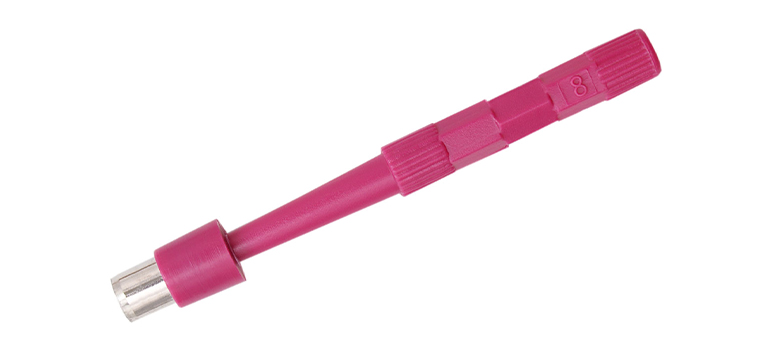
At the heart of a successful FUE procedure are hair transplant punches, the precision instruments that allow surgeons to isolate and remove follicular units. These punches come in various designs, from manual to motorized systems, and play a critical role in determining the quality of grafts and the overall success of the transplant.
Key Features of Advanced FUE Punches
Modern FUE punches are engineered to combine precision, safety, and efficiency. Here are some critical features that distinguish high-quality punches, like those provided by Robbins Instruments:
- Variable Diameter Options
FUE punches are available in diameters ranging from 0.7 mm to 1.2 mm, allowing surgeons to customize extraction based on hair thickness and follicular density. Smaller diameters minimize scarring, while larger punches may be preferred for thicker hair shafts. - Sharpness and Edge Design
Modern punches are engineered with sharp, blunt, or hybrid edge designs to improve precision and reduce follicle transection. Sharp punches ensure clean penetration for dense or coarse hair, while blunt punches reduce transection rates in delicate follicles. - Tactile Feedback and Ergonomics
Precision handling is crucial in FUE. Ergonomically designed punches provide better control, reduce surgeon fatigue, and offer tactile feedback, allowing for consistent and accurate follicular harvesting. - Motorized Compatibility
Many modern FUE punches are compatible with FUE punch machines, which provide consistent rotational or oscillatory movements, enhancing speed and precision. Motorized systems are particularly valuable for high-volume transplants or when aiming to minimize graft damage.
Manual vs. Motorized FUE Punches
A crucial decision for hair restoration surgeons is whether to use manual punches or motorized FUE punch machines. Both approaches have their advantages and considerations:
Manual FUE Punches
Manual punches require the surgeon to apply controlled force and rotation by hand. Advantages include:
- Complete control: Surgeons can feel resistance and adjust depth or angle to avoid damaging follicles.
- Lower cost: Manual punches are less expensive and do not require maintenance or electricity.
- Customization: Surgeons can adapt techniques for different hair types and scalp conditions.
However, manual punches may be more time-consuming and physically demanding, particularly for large procedures.
Motorized FUE Punches
Motorized punches, powered by compact devices, reduce the manual effort needed to extract grafts. Benefits include:
- Speed and efficiency: Motorized FUE punch machines allow for rapid harvesting without compromising follicle integrity.
- Consistent rotation: Reduced variability leads to fewer transected grafts.
- Reduced surgeon fatigue: Ergonomic handling reduces strain during long sessions.
The choice between manual and motorized punches often depends on the surgeon’s experience, patient-specific factors, and procedural volume. Leading suppliers like Robbins Instruments offer both options, ensuring surgeons have access to high-quality, reliable equipment for optimal outcomes.
Types of FUE Hair Transplant Punches
Understanding the different types of FUE hair transplant punches allows surgeons to customize techniques for optimal graft survival. Common types include:
- Sharp Punches Ideal for thick or coarse hair, providing clean penetration and precise follicle isolation
- Blunt Punches Designed to reduce transection risk by gently dissecting around follicles
- Hybrid Punches Combine sharp entry with blunt dissection for balanced safety and efficiency
- Serrated Punches Feature micro-serrations to assist penetration in dense scalp tissue while minimizing trauma
Each punch type is designed with a specific purpose in mind, and understanding their applications ensures maximum graft viability and minimal scarring.
Optimizing Follicular Harvesting Techniques
The performance of hair transplant punches depends not only on the instrument itself but also on the surgeon’s technique. Here are essential tips for achieving flawless follicular harvesting:
- Angle of Entry
The punch must align with the natural exit angle of the hair to avoid follicle transection. Proper angle alignment is crucial for maximizing graft survival. - Controlled Depth
Over-penetration can damage the dermal papilla, while shallow extraction may lead to incomplete graft removal. Modern punches with adjustable depth settings enhance precision. - Minimal Force
Gentle handling reduces tissue trauma and preserves graft integrity. Surgeons should avoid excessive pressure, especially in sensitive scalp areas. - Proper Scalp Preparation
Hydration, cleanliness, and anesthesia administration are critical steps to facilitate smooth punching and harvesting. - Consistent Rotation
For motorized FUE punch machines, maintaining consistent speed and rotation ensures uniform extraction, reducing the risk of graft damage.
How to Choose the Right FUE Punch Supplier
Choosing a trusted FUE punch supplier is essential for safety, precision, and long-term success. Consider the following factors:
- Reputation and Expertise A trusted supplier like Robbins Instruments offers decades of experience in surgical instruments, ensuring precision and reliability.
- Product Range Look for suppliers that provide a variety of punch types, diameters, and motorized options to meet diverse procedural needs.
- Customer Support and Training Comprehensive training and responsive support are invaluable for new surgeons adopting advanced FUE techniques.
- Sterilization and Quality Assurance Ensure the punches are made from high-grade stainless steel and meet stringent sterilization and quality standards.
- Innovation and Research Suppliers investing in research and innovation provide access to cutting-edge tools, improving procedural outcomes.
Conclusion
The success of FUE hair transplantation hinges on precision, control, and quality instrumentation. Hair transplant punches whether manual or motorized are the cornerstone of effective follicular harvesting. By selecting the right punch types, refining surgical technique, and investing in premium instruments from trusted suppliers like Robbins Instruments, surgeons can consistently achieve superior outcomes.
For patients and surgeons alike, staying informed about the latest advancements in FUE punches, FUE punch machines, and FUE hair transplant punches ensures the best outcomes in hair restoration procedures. Whether you are planning your first transplant or seeking to enhance surgical efficiency, leveraging these innovations is a game-changer for achieving natural, lasting results.
FAQS
1. What are hair transplant punches used for?
Hair transplant punches are specialized tools used to extract individual follicular units from the donor area during FUE procedures, ensuring minimal trauma and optimal graft survival.
2. What is the difference between manual and motorized FUE punches?
Manual punches require hand rotation and pressure, offering complete control, while motorized FUE punch machines use powered rotation to increase speed and reduce surgeon fatigue.
3. How do I choose the right FUE punch size?
Punch size depends on hair thickness, follicular density, and patient scalp characteristics. Smaller diameters reduce scarring, while larger sizes may be needed for thick or coarse hair.
4. How can I maintain the longevity of my FUE punches?
Regular cleaning, sterilization, sharpness checks, proper lubrication for motorized units, and safe storage are essential for maintaining performance and safety.
5. Why choose Robbins Instruments for FUE punches?
Robbins Instruments is a trusted supplier offering a wide range of high-quality punches, ergonomic designs, and advanced motorized systems, ensuring precision and optimal surgical outcomes.