
Introduction
Precision is essential in dermatologic procedures. Whether evaluating suspicious lesions, removing benign growths, or collecting tissue for pathology, specimen quality directly impacts diagnostic accuracy. In dermatology and minor surgical practices, the difference between an excellent pathology sample and a compromised specimen often comes down to one critical instrument: shave biopsy blades.
Healthcare professionals perform thousands of skin biopsies every day. Yet many underestimate how much blade quality impacts tissue integrity, procedural efficiency, patient comfort, and pathology outcomes. A poorly designed blade can crush tissue, create uneven cuts, and complicate histological interpretation. Conversely, high-performance biopsy blades deliver smooth excisions, preserve specimen architecture, and help clinicians achieve predictable results.
Understanding the Importance of Shave Biopsy Procedures
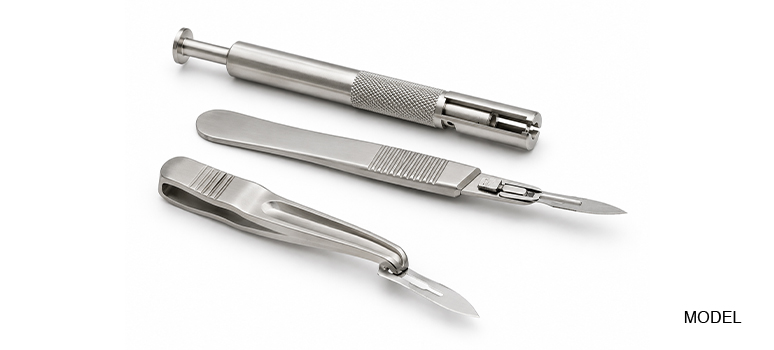
A shave biopsy is one of the most frequently performed dermatologic procedures. It involves removing a superficial portion of skin using a specialized blade to obtain tissue for pathological examination.
Shave biopsies are commonly used for:
- Suspicious pigmented lesions
- Seborrheic keratoses
- Skin tags
- Basal cell carcinomas
- Squamous cell carcinomas
- Actinic keratoses
- Benign nevi
- Epidermal lesions
The procedure offers several advantages:
- Minimal invasiveness
- Rapid execution
- Excellent cosmetic outcomes
- Reduced need for sutures
- Faster patient recovery
However, these benefits can only be fully realized when practitioners utilize high-quality shave biopsy blades engineered specifically for dermatologic applications.
Why Blade Performance Matters in Pathology
Pathologists rely on intact tissue architecture to make accurate diagnoses. Any distortion introduced during tissue collection can negatively affect interpretation.
High-performance blades help preserve:
Cellular Integrity
Sharp blades minimize tissue trauma during excision. Reduced crushing artifacts allow pathologists to examine cellular structures more accurately.
Specimen Orientation
Uniform cuts help maintain proper specimen orientation, making histological sectioning easier and more reliable.
Margin Evaluation
Clean excision margins improve pathological assessment and facilitate treatment planning.
Diagnostic Confidence
When tissue quality remains uncompromised, pathologists can render diagnoses with greater confidence and precision.
For these reasons, the quality of biopsy blades should never be considered a minor purchasing decision.
Key Features of Premium Shave Biopsy Blades
Not all blades are manufactured to the same standards. Premium dermatologic blades incorporate design features that optimize clinical performance.
Exceptional Sharpness
The cutting edge must remain consistently sharp throughout the procedure. Superior sharpness allows practitioners to glide through tissue with minimal resistance.
Benefits include:
- Cleaner incisions
- Less tissue trauma
- Reduced patient discomfort
- Better specimen quality
Flexible Blade Design
Flexibility enables clinicians to conform to anatomical contours while maintaining precise control.
Flexible blades facilitate:
- Uniform tissue depth
- Consistent specimen thickness
- Improved handling around curved surfaces
Enhanced Ergonomics
Comfortable handling contributes significantly to procedural accuracy.
Quality blade systems offer:
- Better grip security
- Improved maneuverability
- Reduced hand fatigue
- Greater procedural confidence
Medical-Grade Stainless Steel
Premium stainless steel provides:
- Corrosion resistance
- Long-lasting sharpness
- Structural integrity
- Reliable performance
Healthcare providers benefit from consistent cutting efficiency across multiple procedures.
How Shave Biopsy Blades Improve Diagnostic Accuracy
Every dermatologist understands the frustration of receiving a pathology report indicating inadequate or fragmented tissue.
High-performance shave biopsy blades help prevent these issues through:
Reduced Tissue Fragmentation
Sharp, precise cutting minimizes specimen breakage.
Preservation of Histological Detail
Delicate skin structures remain intact, supporting accurate microscopic examination.
Consistent Tissue Thickness
Uniform specimens facilitate laboratory processing and sectioning.
Minimized Mechanical Distortion
Less pressure on tissue translates into fewer artifacts that could obscure diagnostic findings.
These advantages ultimately contribute to better patient care and improved clinical outcomes.
Applications of Shave Excision Biopsy in Modern Dermatology
The shave excision biopsy has evolved beyond basic tissue sampling.
Today, practitioners use it for:
Diagnostic Procedures
Obtaining representative samples from suspicious lesions.
Therapeutic Removal
Excising benign growths with excellent cosmetic outcomes.
Cosmetic Dermatology
Removing raised lesions that affect appearance.
Skin Cancer Assessment
Evaluating lesions with malignant potential.
Routine Office-Based Procedures
Performing efficient interventions without requiring advanced surgical facilities.
The versatility of the shave excision biopsy makes it an essential component of dermatologic practice.
Choosing the Right Shave Biopsy Blade
Clinicians should evaluate several factors when selecting blades.
Procedure Type
Different lesions may require varying blade shapes and sizes.
Blade Sharpness
Consistent cutting performance remains essential.
Flexibility Requirements
Flexible blades improve contour adaptation.
Manufacturer Reputation
Trusted manufacturers maintain rigorous quality standards.
Clinical Reliability
Proven performance across diverse procedural environments is critical.
Organizations that prioritize instrument quality frequently experience improved efficiency and better patient outcomes.
Why Healthcare Professionals Trust Robbins Instruments
When selecting surgical instruments, reliability matters. Healthcare providers require products that consistently deliver precision, durability, and performance.
Robbins Instruments has established a strong reputation by providing high-quality surgical and dermatologic instruments designed to meet the demands of modern clinical practice.
Professionals choose Robbins Instruments because of:
Commitment to Quality
Every instrument is engineered to support precise clinical performance.
Advanced Manufacturing Standards
Premium materials and strict quality control ensure dependable results.
Extensive Product Selection
Healthcare providers can access specialized instruments tailored to their procedural needs.
Clinical Confidence
Reliable instrumentation helps practitioners focus on patient care rather than equipment limitations.
For dermatologists seeking superior shave biopsy blades, Robbins Instruments represents a trusted source of professional-grade solutions.
Future Innovations in Dermatologic Biopsy Instruments
Advancements in dermatology continue to drive innovation in surgical instrumentation.
Emerging trends include:
- Enhanced blade metallurgy
- Improved ergonomic designs
- Greater precision manufacturing
- Single-use sterile systems
- Optimized cutting geometries
These developments aim to further improve procedural efficiency, specimen quality, and patient outcomes.
As technology evolves, practitioners who invest in premium instruments will remain positioned to deliver exceptional care.
Conclusion
The pursuit of diagnostic excellence begins at the moment tissue is collected. High-quality shave biopsy blades play a critical role in preserving specimen integrity, improving pathology accuracy, enhancing patient comfort, and streamlining dermatologic procedures. Whether performing a routine shave biopsy or a more advanced shave excision biopsy, clinicians benefit significantly from instruments engineered for precision and consistency.
Investing in premium biopsy blades supports better outcomes throughout the diagnostic process, from tissue collection to pathology evaluation. For practitioners seeking trusted, professional-grade surgical solutions, Robbins Instruments continues to deliver the performance, reliability, and quality necessary to achieve flawless pathology samples and exceptional patient outcomes.
FAQS
1. What are shave biopsy blades used for?
Shave biopsy blades are specialized surgical instruments used to remove superficial skin lesions and collect tissue samples for pathological examination.
2. How does a shave biopsy differ from a punch biopsy?
A shave biopsy removes superficial layers of skin using a blade, while a punch biopsy removes a cylindrical core of tissue extending deeper into the skin.
3. Why is blade sharpness important in shave biopsies?
Sharp blades minimize tissue trauma, preserve specimen integrity, improve pathology interpretation, and enhance patient comfort.
4. What is a shave excision biopsy?
A shave excision biopsy involves removing an entire raised lesion using a blade while simultaneously obtaining tissue for diagnostic evaluation.
5. Why do dermatologists choose premium biopsy blades?
Premium biopsy blades provide cleaner cuts, better specimen quality, improved procedural efficiency, and more reliable pathology results.